My Insight
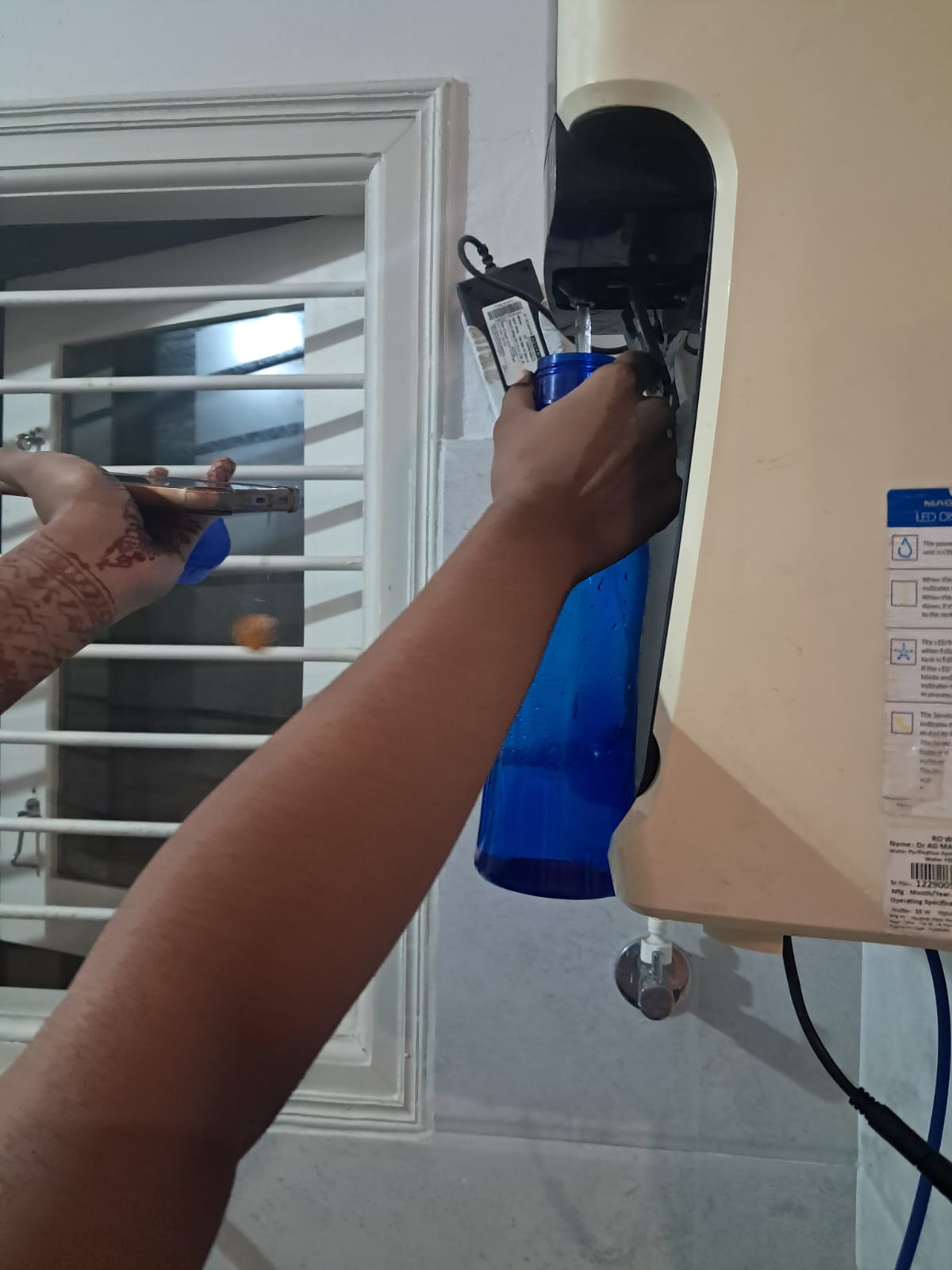
This created a balanced dataset of real + simulated sounds that trained the model to recognize the subtle audio change when a bottle nears fullness.
ECHO FILL
Intelligent Water-Level Detection System
The goal of Echo Fill was to design an autonomous water-filling system that stops automatically once the bottle is full, without the need for manual monitoring or physical sensors.
Instead of relying on hardware probes or float switches, the system uses machine learning to interpret sound. By “listening” to the audio frequency and tone changes as water rises, the model predicts when the bottle reaches fullness and triggers a stop command.
Project Overview
· Librosa · NumPy · Pandas · Random Forest Classifier

Tools used:
Model Development & Results
Research & Data Foundation
Data Augmentation & Labelling
System Flow
Research & Data Foundation
Data Augmentation & Labelling
Model Development & Results
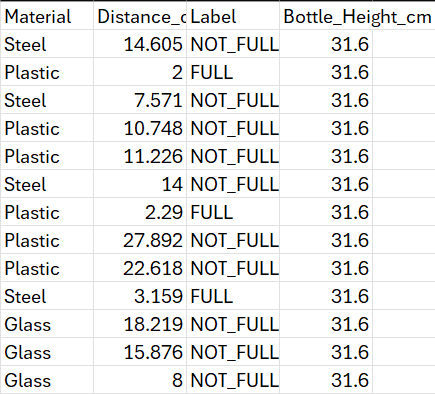
The experiment began with recording 12 real-world audio samples of bottles being filled with water at four different nozzle distances , 2 cm, 8 cm, 14 cm, and 22 cm , for three material types (Glass, Plastic, Steel).
Each audio was converted into numerical features (MFCCs, spectral centroid, zero-crossing rate, etc.) using Librosa, giving a dataset that captured the texture and brightness of the sound.
Tonal / textural → 13 MFCCs
Brightness → Spectral Centroid
Noisiness → Zero Crossing Rate
Harmonics → Chroma STFT
Energy → Spectral Rollof
(snippet)
To improve generalization, a data augmentation pipeline was developed that synthetically generated new samples by simulating different fill distances (1–32 cm) and adding slight ambient noise.
A critical threshold of 4 cm was used , if the water surface was within 4 cm of the bottle mouth, the label was FULL, otherwise NOT_FULL.
Metric
Accuracy
Cross-Validation
Material Accuracy
Random Forest
Interpretation
Predicts FULL/NOT_FULL correctly 9 out of 10 times
92.5%
91.8% ± 4.5%
Glass: 94.2% · Plastic: 89.7% · Steel: 86.3%
Stable across random partitions
Material affects sound clarity
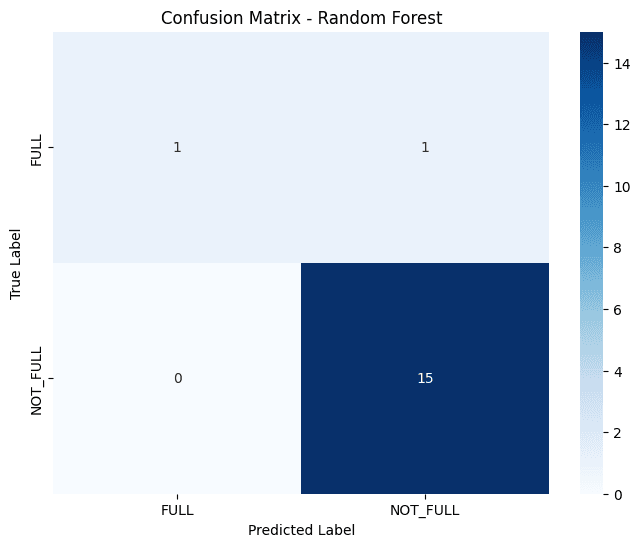
Three models were compared — Logistic Regression, SVM, and Random Forest.
The Random Forest Classifier performed best, with high consistency and interpretability.
System Flow
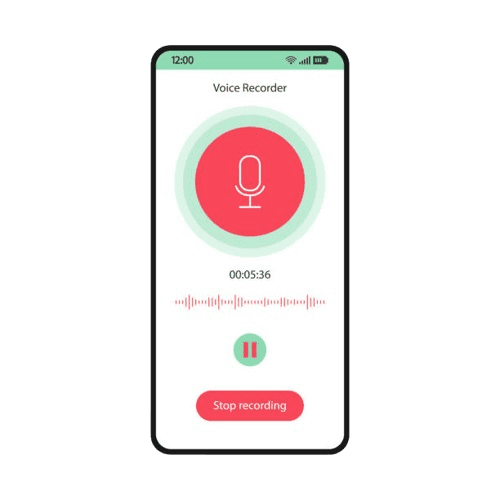
Full / Not Full
The biggest insight was that awareness can replace hardware.
Through this project, I learned that sound itself can act as a natural sensor ,invisible, ambient, yet incredibly informative.
By teaching a machine to “listen” to water, I built a system that responds to the world through perception rather than control.
Echo Fill changed how I view smart design: it’s not about adding more devices, but about revealing intelligence that’s already present in the environment.