Arriv
Know when to leave.
Skip the wait.
Hospital waiting rooms often involve long and unpredictable delays. Through personal experience, I noticed that the frustration wasn’t caused only by waiting itself, but by not knowing when the wait would end.
Patients repeatedly ask receptionists for updates, arrive excessively early, or avoid larger hospitals entirely because the waiting process feels uncertain and mentally exhausting.
Instead of trying to eliminate waiting completely, I reframed the challenge into:
“How might we help patients decide when to leave for the hospital?”
This led to Arriv, a system that combines queue progress with live travel time to help users make informed decisions about when to leave.
Tool used: Figma, Firebase, Google Maps API, HTML/CSS/JS
Project Overview



Problem
User Observations
Reframing the Problem
Introducing Arriv
User Journey
Design Decisions
Technical Framework
Impact of the System
Challenges & Limitations
Most OPD systems only provide token numbers, not meaningful timing visibility.
As a result:
patients physically wait for long durations
reception desks are repeatedly interrupted
users experience uncertainty and anxiety
hospital visits feel more exhausting than necessary
Problem
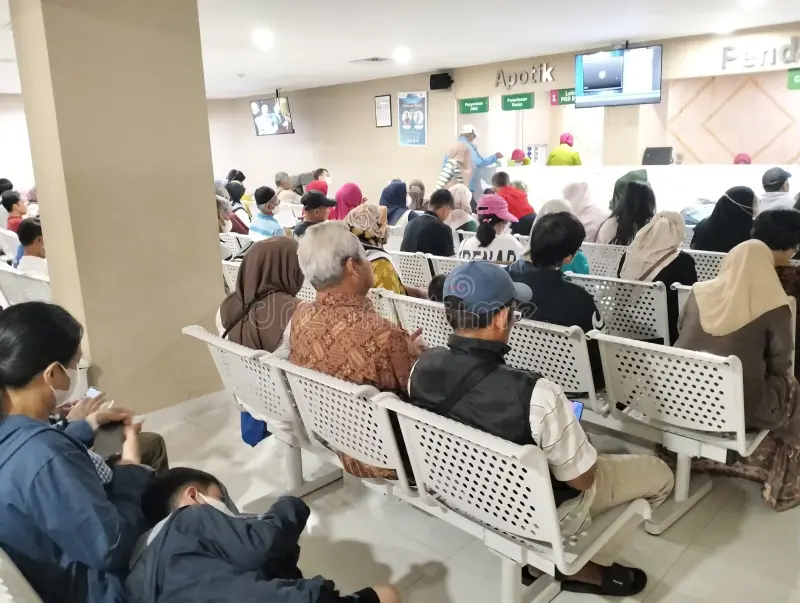
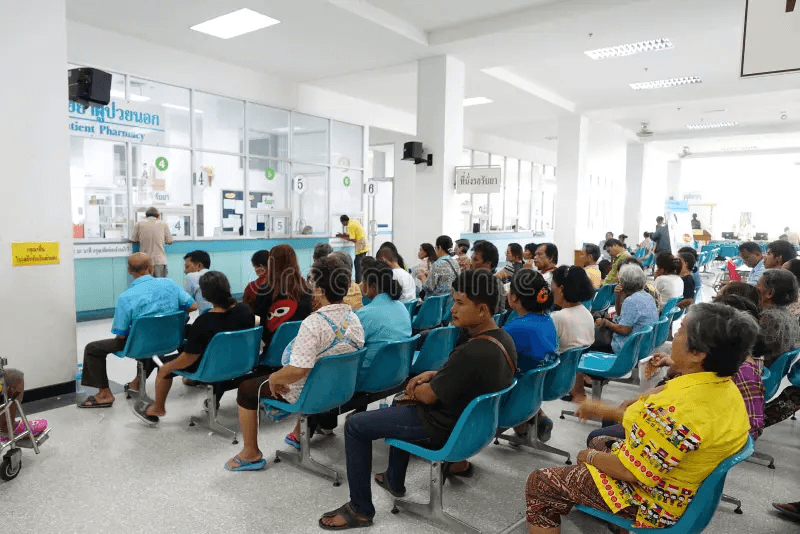
“The issue wasn’t waiting itself.
The issue was unpredictability.”
Reframing the Problem
Initially, I approached the project as a problem of long waiting durations.
But during observation and research, I realized the deeper frustration came from uncertainty rather than time itself.
User Observation
Through observation and personal experience, I noticed recurring behavioral patterns:
Patients:
repeatedly asked receptionists for updates
hesitated to leave waiting areas
mentally overestimated waiting duration
preferred smaller clinics due to predictability
Reception Staff:
constantly handled timing-related interruptions
lacked systems for clear queue communication
“The issue wasn’t waiting itself.
It was unpredictability.”
This shifted the focus from eliminating waiting
to helping users better understand and manage it.
Initial Direction
“How can waiting time be reduced?”
shorter queues
faster consultations
less crowding
reducing hospital stay duration
Reframed Direction
“How can patients make informed timing decisions?”
predictable waiting experience
queue visibility
departure guidance
reduced uncertainty and anxiety
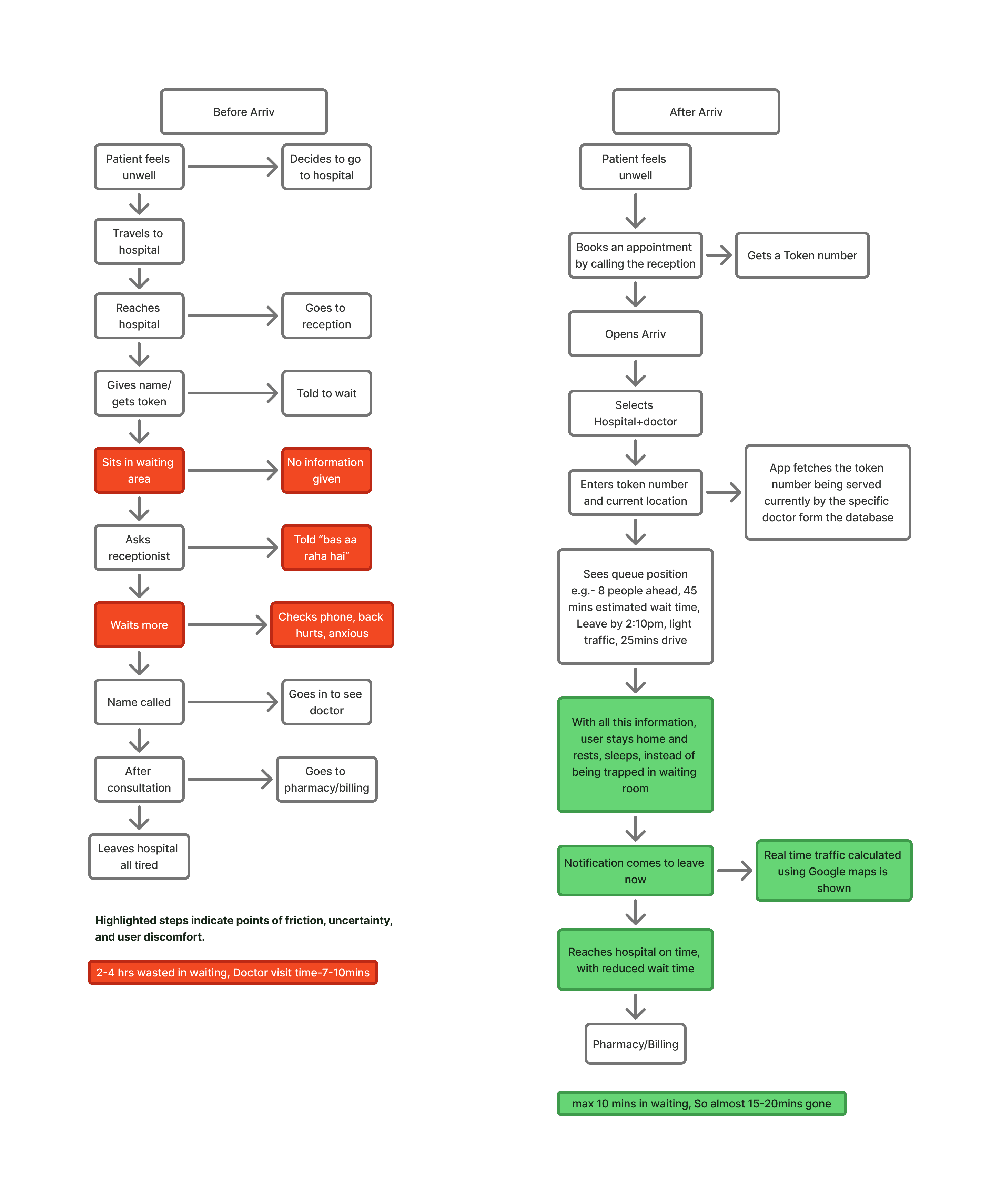
Step 1
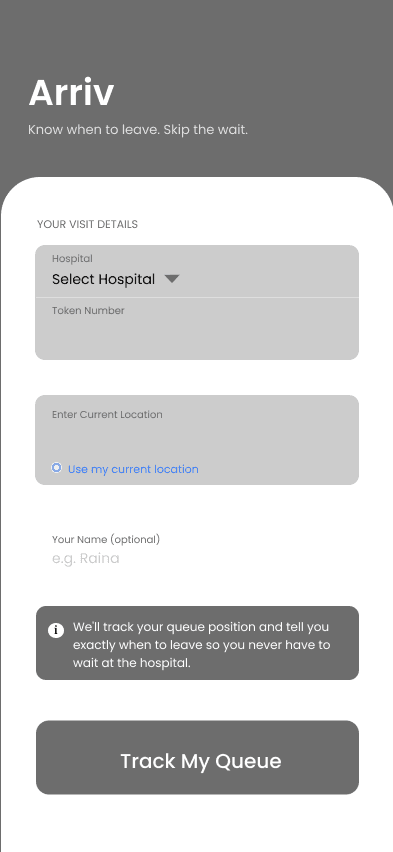
User books appointment and receives token number.
Step 2
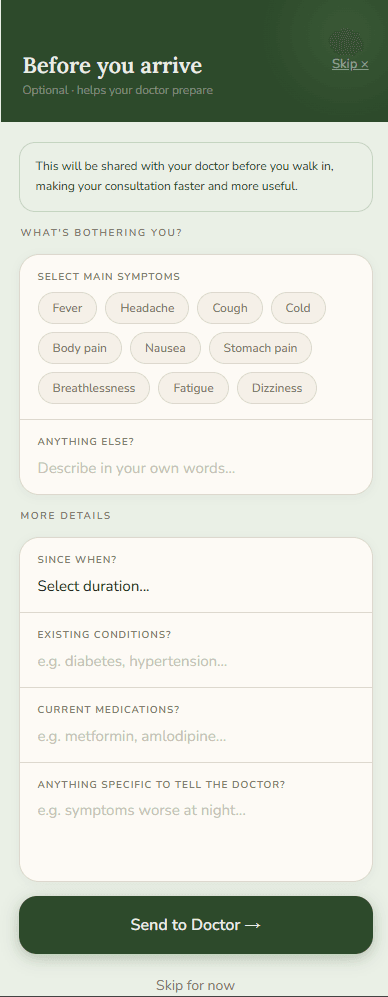
User opens Arriv and enters:
hospital
doctor
token number
current location
Step 4
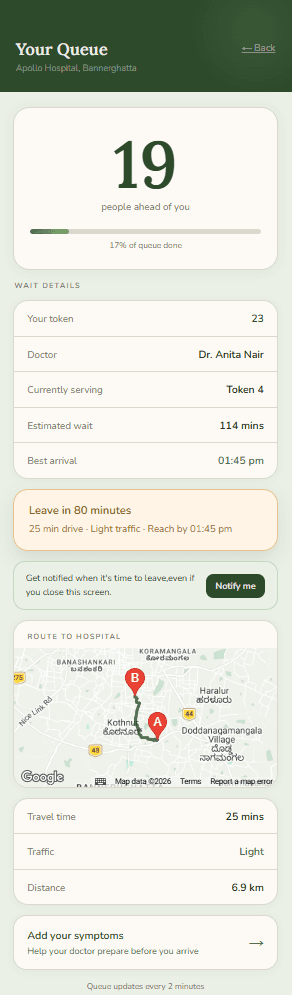
User receives actionable guidance:
Leave now
Leave in 20 minutes
You may be late
Step 3
System combines:
queue progression
estimated consultation duration
live traffic/travel time
Design Decisions
.
Action-Oriented Guidance
Instead of only displaying queue numbers, the system gives direct recommendations such as:
“Leave in 15 minutes”
“You may be late”
This reduces cognitive stress during medical visits.
User Journey
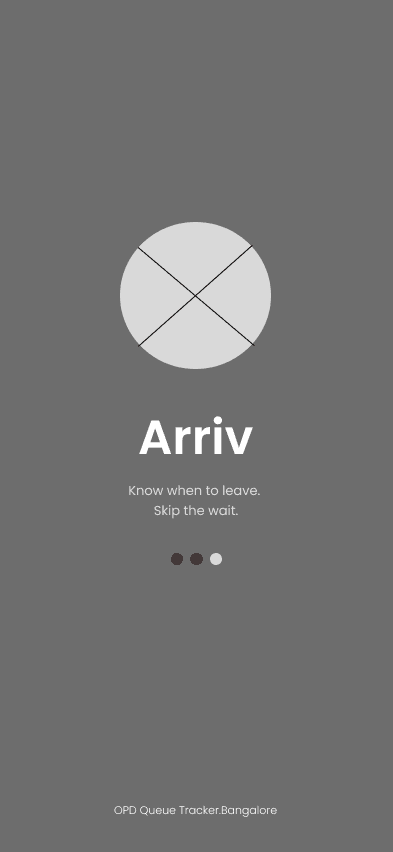
Calm Visual Language
The interface uses:
muted greens
soft contrast
spacious layouts
To avoid increasing anxiety during already stressful situations.
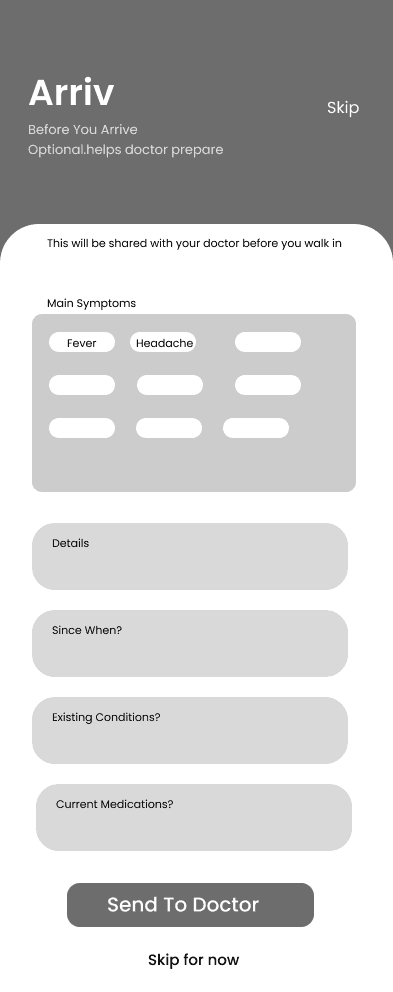
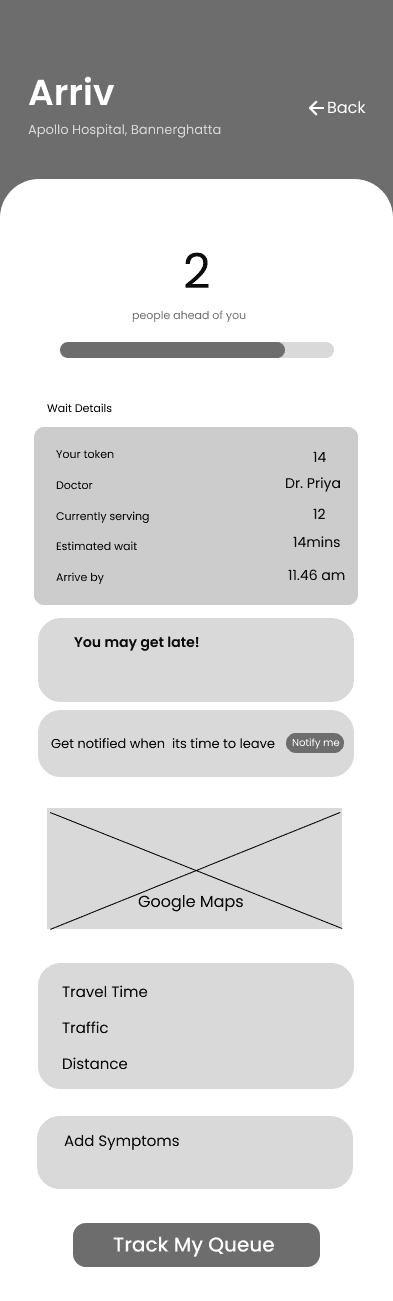
Simplified Information Hierarchy
The UI prioritizes:
departure timing
queue status
travel duration
so users immediately understand what action to take.
Arriv is a queue-awareness system that helps users determine:
how long until their turn
when they should leave
whether they may be late
Instead of physically waiting at the hospital, users can comfortably
remain at home until their appointment approaches.
Introducing Arriv
Technical Framework
Impact of the System
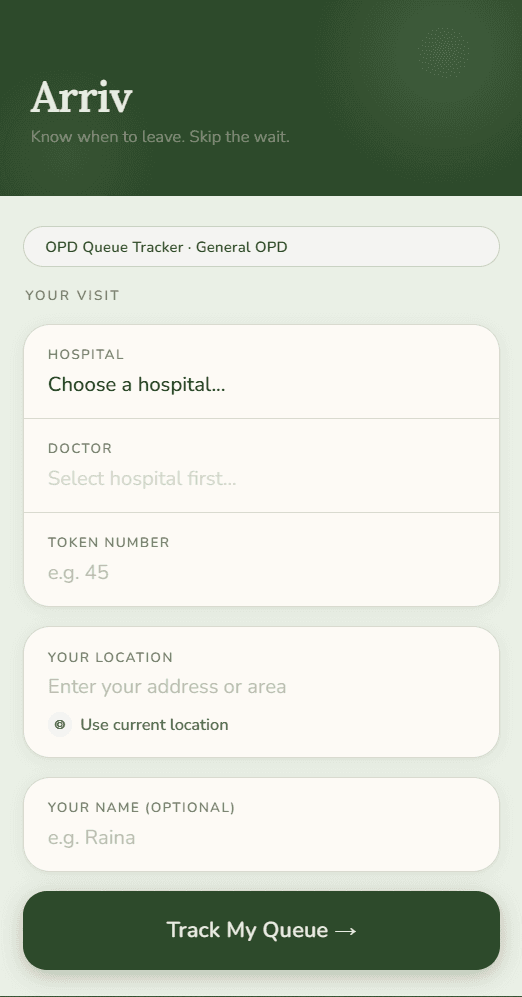
The prototype combines:
Firebase Realtime Database for queue simulation
Google Maps API for live travel estimation
browser notifications for timing alerts
frontend logic built using HTML/CSS/JavaScript
The system estimates whether a user can realistically reach the hospital before their consultation window.
Live Prototype-
Challenges & Limitations
Reflection
This project taught me how small informational gaps can strongly influence user behavior,
stress, and decision-making.
Rather than attempting to eliminate waiting completely, I explored how design could make
waiting feel more understandable and manageable.
Waiting may be unavoidable.
But uncertainty can be designed for.
The current prototype depends on hospitals updating queue progress consistently, which may
affect timing accuracy.
Consultation durations may also vary unpredictably depending on patient complexity.
However, even approximate visibility significantly improves the waiting experience compared
to having no timing awareness at all.